
Introduction
A Legionella audit is not simply a paperwork exercise. It is an assessment of whether you are effectively controlling the risk within your water systems and whether you can demonstrate that control through clear documentation.
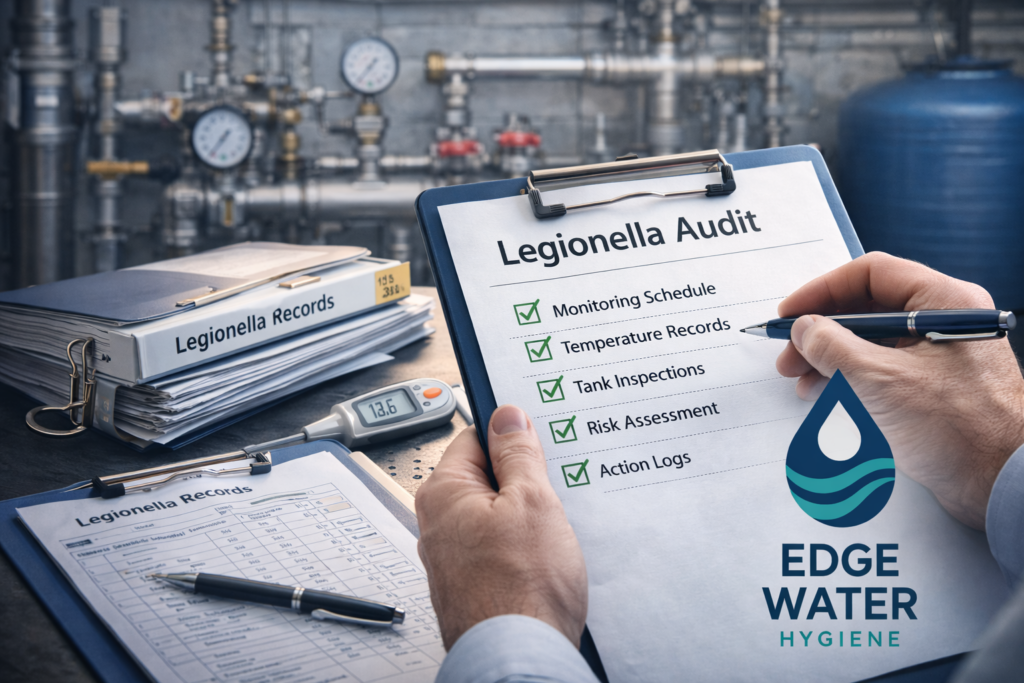
What Triggers an Audit?
Audits may occur as part of internal compliance reviews, external consultancy inspections, client due diligence, insurance requirements, or following concerns about system management. In some cases, they may follow enforcement interest or incident investigation.
Stage 1 – Documentation Review
The first stage of most audits focuses on documentation. Auditors typically request:
- The Legionella risk assessment
- The written scheme of control
- Responsible person details
- Monitoring records
- Tank inspection records
- Flushing logs
- TMV servicing records
- Evidence of remedial actions
Common Documentation Failures
Frequent issues identified during audits include:
- Missing temperature logs
- Incomplete tank inspection records
- Unclear allocation of responsibility
- Lack of documented reviews
- Remedial actions that are not formally tracked
Stage 2 – Physical System Verification
Auditors may verify that monitoring reflects actual site conditions. They may inspect cold water storage tanks, calorifiers, sentinel outlets, and compare physical temperatures with recorded data.
Stage 3 – Review of Management Structure
Beyond technical checks, auditors assess whether management arrangements are effective. They look for evidence of structured oversight, periodic review, and clear escalation procedures where issues arise.
Why Structure Determines Audit Outcomes
Audits rarely fail because nothing is being done. They fail because monitoring is inconsistent, poorly organised, or difficult to evidence. Structured documentation demonstrates active control and reduces ambiguity.
How the Edge Water Hygiene Digital Compliance Logbook Supports Audit Readiness
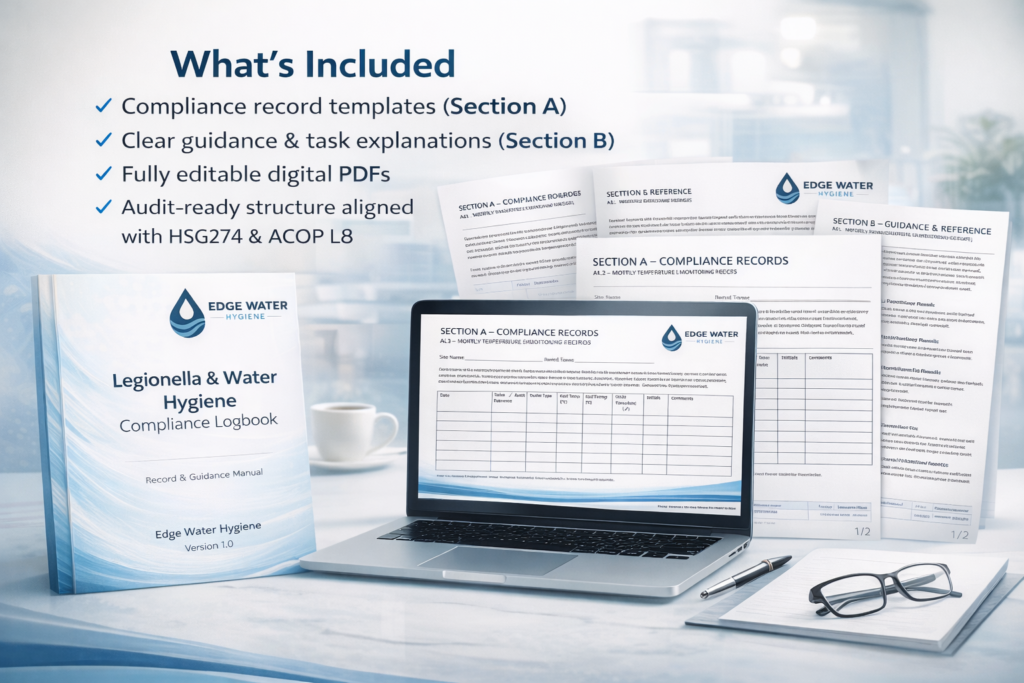
The logbook is structured in two clear sections.
Section A – Management & Control establishes responsible persons, risk assessment references, written scheme alignment, and monitoring schedules.
Section B – Monitoring & Record Keeping provides consistent record sheets for temperature checks, tank inspections, flushing regimes, TMV servicing, remedial actions, and system reviews.
Designed for Non-Technical Responsible Persons
Developed by an experienced water hygiene professional, the logbook provides clarity for facilities managers, responsible persons, and organisations without specialist engineering knowledge. The structured format ensures records are consistent and ready for review.
Conclusion
During a Legionella audit, your documentation tells the story of your compliance. A structured digital compliance logbook provides organised, defensible evidence of control. For organisations seeking a ready-built system that supports audit readiness, the Edge Water Hygiene Digital Compliance Logbook offers a practical solution.
Leave a Reply