Introduction
For many organisations, Legionella compliance records have traditionally been kept in paper folders. However, as compliance expectations increase and audits become more structured, digital logbooks are becoming the preferred solution. Understanding the differences is key to maintaining defensible compliance.
The Problem with Paper Logbooks
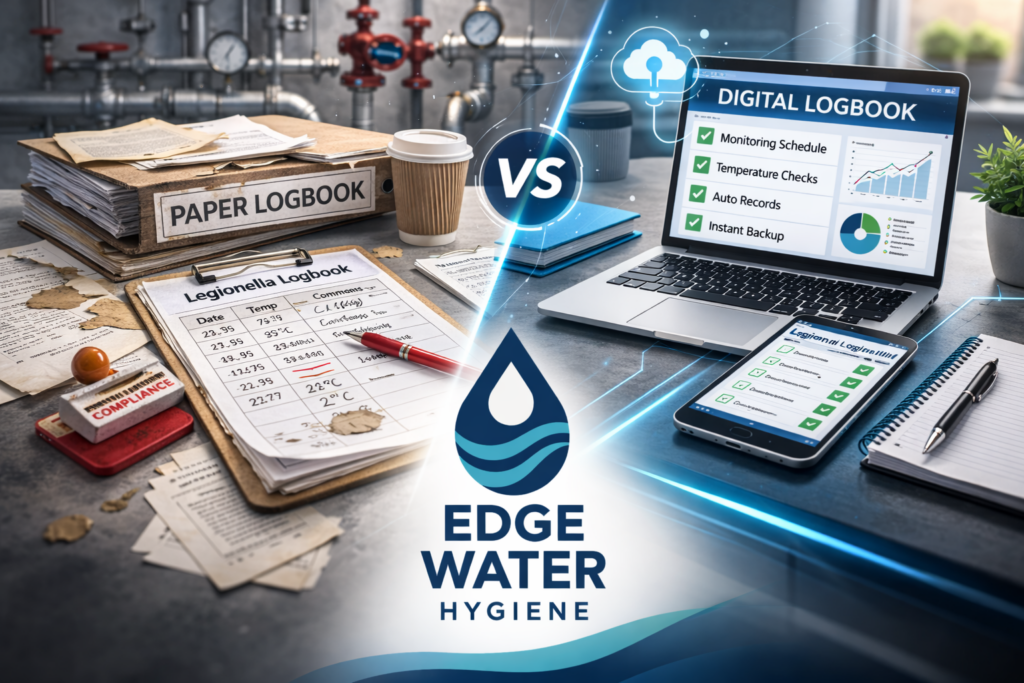
Paper systems are often inconsistent, incomplete, and difficult to review. Documents can be misplaced, handwriting may be unclear, and tracking remedial actions across multiple sheets becomes inefficient. During audits, retrieving evidence quickly can be challenging.
Limitations of Informal Spreadsheets
While spreadsheets may appear more organised than paper, they are frequently unstructured, lack standardised formats, and are prone to version control issues. Without a clear compliance framework, spreadsheets can create gaps rather than control.
Advantages of a Structured Digital Logbook
A structured digital compliance logbook centralises all required documentation into one organised system. It promotes consistency in monitoring, simplifies record review, improves accountability, and makes audit preparation significantly more efficient.
Audit Readiness and Accountability
In the event of an internal review, external audit, or investigation, clear and consistent digital records demonstrate active management. Structured documentation reduces ambiguity and supports defensible compliance.
Consistency Across Multiple Sites or Teams
For organisations managing multiple buildings or shared responsibilities, a digital logbook ensures uniform record keeping across all sites. This improves oversight and reduces the risk of missed monitoring tasks.
Inside the Edge Water Hygiene Digital Compliance Logbook
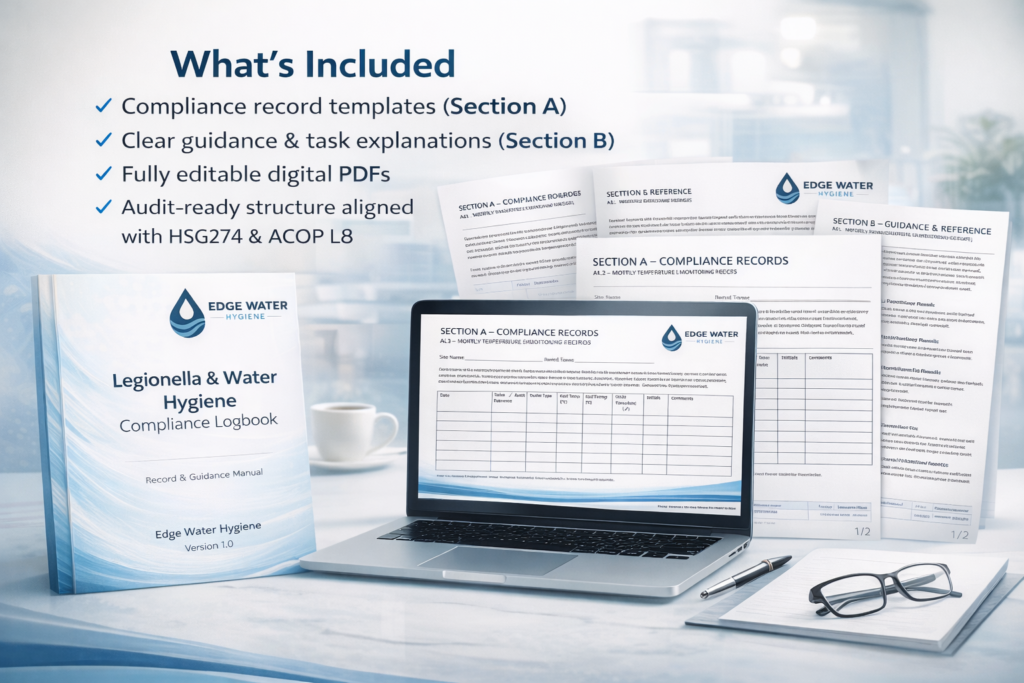
The Edge Water Hygiene Digital Compliance Logbook is divided into:
Section A – Management & Control, which defines responsible persons, risk assessment references, written scheme alignment, and monitoring schedules; and
Section B – Monitoring & Record Keeping, providing structured record sheets for temperature checks, tank inspections, flushing regimes, TMV servicing, remedial actions, and system reviews.
Designed for Non-Technical Responsible Persons
Developed by an experienced water hygiene professional, the logbook is structured for facilities managers, responsible persons, and organisations that require clarity without specialist engineering knowledge. The format guides consistent compliance and simplifies administration.
Conclusion
While paper systems may appear familiar, they often introduce inconsistency and administrative risk. A structured digital compliance logbook provides clarity, control, and audit readiness in a single organised framework. For organisations seeking a professional and ready-built solution, the Edge Water Hygiene Digital Compliance Logbook offers a practical and defensible approach.
Leave a Reply