Thermostatic Mixing Valves (TMVs) play an important role in modern water systems. They are designed to reduce the risk of scalding by blending hot and cold water to a safe outlet temperature, particularly in higher-risk environments such as healthcare premises, care homes, schools, hotels, and public facilities.
However, while TMVs improve user safety, they can also introduce additional Legionella risks if they are not correctly installed, maintained, and monitored.
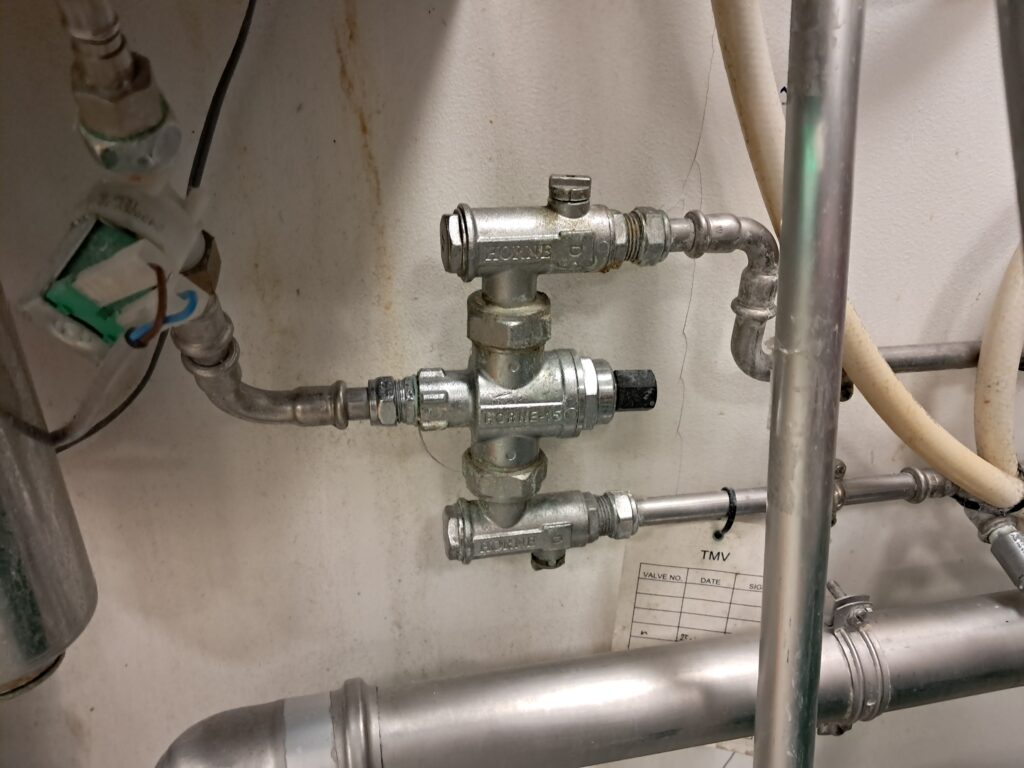
Why TMVs Are Used
Hot water systems are typically stored and distributed at temperatures high enough to control bacterial growth. Guidance generally recommends storing hot water at 60°C and achieving at least 50°C at outlets within one minute.
At these temperatures, however, there is an increased risk of scalding, especially for vulnerable users.
TMVs solve this issue by mixing hot and cold water at the point of use, delivering water at a safer temperature while allowing the main hot water system to remain at Legionella control temperatures.
Where Problems Can Occur
Although TMVs are effective safety devices, they can unintentionally create ideal conditions for bacterial growth if poorly managed.
1. Tepid Water Conditions
TMVs blend hot and cold water together, often producing water temperatures between 35°C and 45°C — the temperature range where Legionella bacteria can multiply most rapidly.
If water remains stagnant within the valve body or associated pipework, this can increase risk significantly.
2. Low Use Outlets
Showers, taps, or facilities that are infrequently used can allow water to stagnate behind TMVs for extended periods.
This is commonly found in:
- Spare hotel rooms
- Seasonal facilities
- Vacant office areas
- Unused clinical rooms
- Accessible toilets with low footfall
Without regular flushing, these outlets can become problematic.
3. Scale and Debris Build-Up
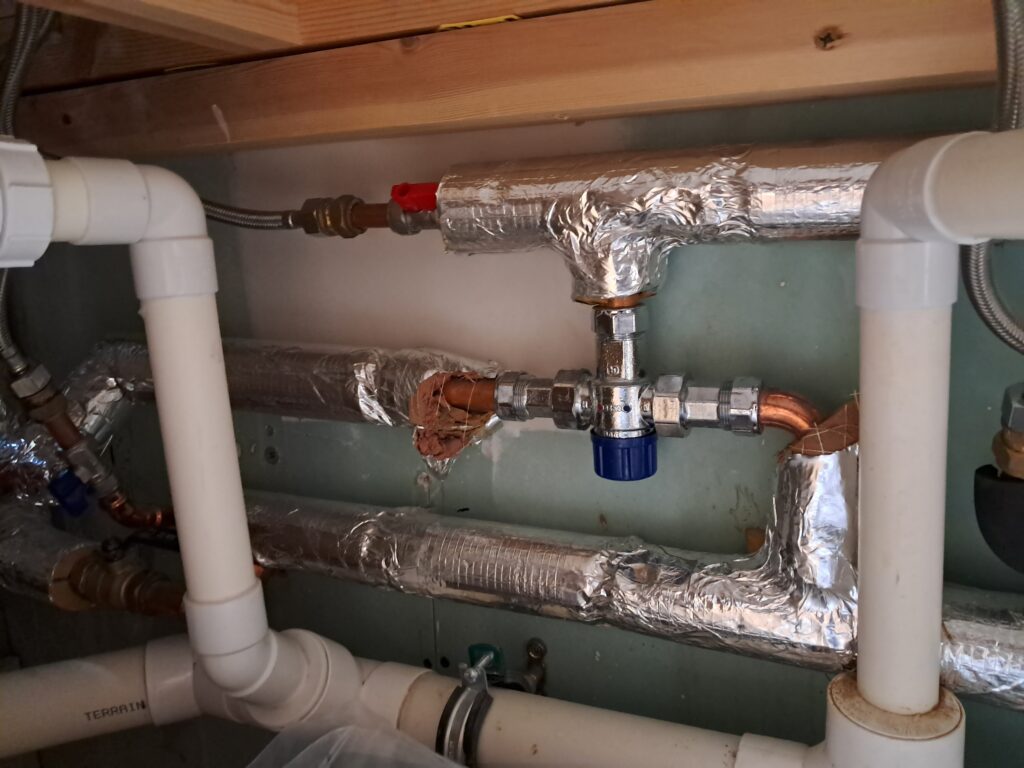
TMVs contain strainers, non-return valves, and internal components that can accumulate scale, sediment, and biofilm over time.
Poor maintenance can reduce performance, affect temperature control, and create internal contamination risks.
4. Incorrect Installation
TMVs installed too far from outlets, connected to oversized pipework, or left serving redundant pipe runs can increase water retention and stagnation.
In some cases, old TMVs remain in place long after outlet usage changes, creating hidden dead legs within systems.
Good Practice for TMV Management
Effective TMV management should form part of the wider water safety strategy.
Key control measures include:
- Regular temperature monitoring
- Routine inspection and servicing
- Cleaning and descaling where required
- Flushing low-use outlets
- Removing redundant pipework and unused valves
- Ensuring valves are accessible for maintenance
- Reviewing whether TMVs are still required in low-risk areas
For higher-risk environments such as healthcare settings, additional monitoring frequencies and fail-safe testing may also be required.
Balancing Scalding and Legionella Risks
The key point is that TMVs themselves are not the problem. In many buildings they are essential safety devices.
The issue arises when they are installed without considering long-term maintenance, water usage patterns, or Legionella control requirements.
A well-designed and properly managed system should always balance:
- Scald prevention
- Water hygiene
- System usability
- Ongoing maintenance access
Final Thoughts
TMVs are often overlooked during routine inspections, yet they can become one of the most important components in managing both user safety and water hygiene.
Regular review, maintenance, and sensible system design are essential to ensure these devices continue to protect users without introducing unnecessary Legionella risk.
For organisations responsible for complex water systems, understanding this balance is a key part of effective water safety management.
Leave a Reply