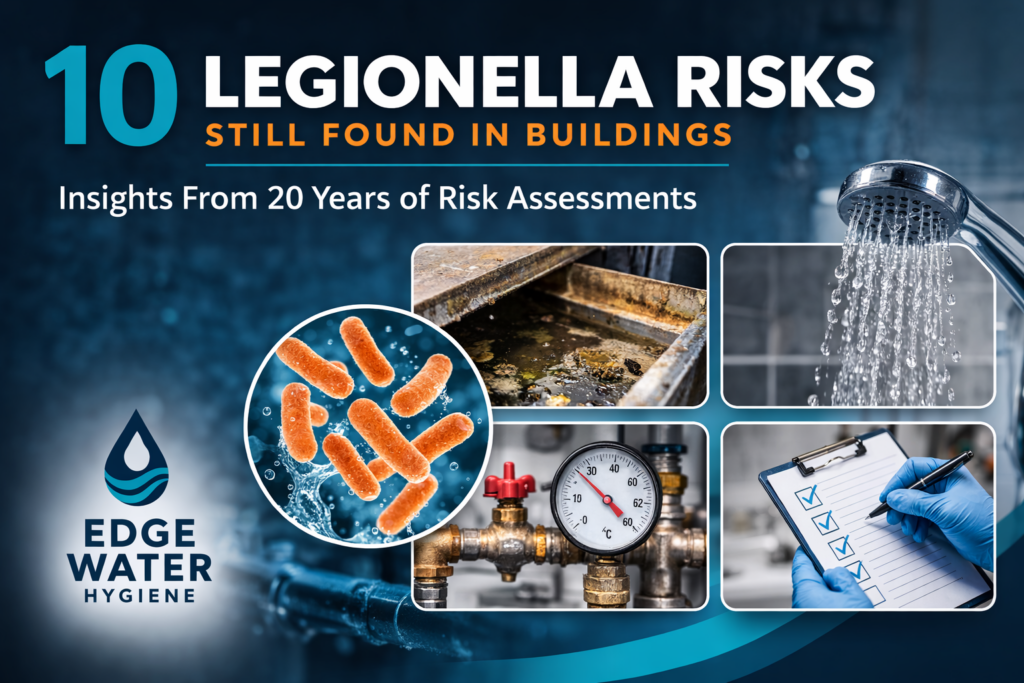
After more than 20 years carrying out Legionella risk assessments across the UK, I’ve inspected hundreds of water systems in buildings including hotels, offices, schools, hospitals and residential properties.
Despite improvements in water hygiene management and clearer guidance from the Health and Safety Executive (HSE), many of the same Legionella risks still appear during inspections today. In most cases, these risks are simple issues that could be prevented with proper monitoring, maintenance and system management. Understanding these common problems helps building owners and facilities managers ensure their water systems remain compliant with current UK guidance and operate safely.
Below are ten Legionella risks that are still frequently identified during building risk assessments.
1. Little-Used Water Outlets
- Spare showers
- External taps
- Guest bathrooms
- Emergency wash stations
- Toilets in rarely used areas
2. Dead Legs in Pipework
- Pipework left behind after refurbishments
- Sections of pipe where outlets have been removed
- Redundant plumbing that no longer connects to active outlets
3. Poor Temperature Control
- Cold water exceeding 20°C
- Hot water stored below recommended temperatures
- Hot outlets failing to reach 50°C within one minute
4. Oversized Cold Water Storage Tanks
- Tanks installed for historic demand that no longer exists
- Poor water turnover leading to stagnation
5. Poorly Maintained Water Storage Tanks
- Sediment build-up
- Damaged or missing lids
- Insect or vermin access
- Deteriorating insulation
6. Missing Asset Registers
- No schematic drawings of the water system
- Unknown outlets and monitoring points
- Difficulty implementing flushing regimes
7. Lack of a Written Scheme of Control
- No defined monitoring schedule
- Unclear responsibilities for water safety
- Difficulty demonstrating compliance
8. Thermostatic Mixing Valves Not Maintained
- TMVs not serviced regularly
- Valves creating warm water conditions within the Legionella growth range
9. Poor Monitoring and Record Keeping
- Missing temperature records
- Inconsistent monitoring schedules
- Incomplete maintenance documentation
10. System Changes Without Updating Risk Assessments
- Refurbishments altering pipework layouts
- New equipment connected to water systems
- Changes in building occupancy or usage
Common Legionella Problems Found During Risk Assessments
- Little-used outlets causing water stagnation
- Dead legs within pipework systems
- Poor hot and cold water temperature control
- Oversized cold water storage tanks
- Infrequent monitoring of water temperatures
- Lack of flushing regimes for low-use outlets
- Missing asset registers and system drawings
- Poorly maintained thermostatic mixing valves
- Accumulated sediment in cold water storage tanks
- Outdated Legionella risk assessments
Signs Your Building May Have a Legionella Risk
- Hot water taking a long time to reach temperature
- Cold water temperatures exceeding 20°C
- Visible debris inside water storage tanks
- Low-use outlets within rarely accessed areas
- Incomplete water hygiene monitoring records
- Outdated or missing Legionella risk assessments
Regular Legionella risk assessments help identify potential hazards within building water systems and ensure appropriate control measures are in place.
At Edge Water Hygiene we provide professional Legionella risk assessments, water hygiene monitoring programmes and compliance advice for a wide range of buildings including schools, hotels, offices, healthcare facilities and residential properties. If you require advice about Legionella risk assessments or water hygiene management, our team would be happy to assist.
Further Guidance and Resources:
For more information on Legionella control and UK water hygiene legislation, the following guidance documents and resources may be useful.
ACoP L8 – Legionnaires’ disease: The control of Legionella bacteria in water systems
https://www.hse.gov.uk/pubns/books/l8.htm
HSG274 – Legionnaires’ disease: Technical guidance
https://www.hse.gov.uk/pubns/books/hsg274.htm
Health and Safety Executive – Legionnaires’ disease guidance
https://www.hse.gov.uk/legionnaires/
Legionella Control Association (LCA)
https://www.legionellacontrol.org.uk/
UK Government Guidance on Legionnaires’ Disease
https://www.gov.uk/guidance/legionnaires-disease
Leave a Reply